You can install a Chicago screw with just a flathead screwdriver, but it's a lot easier with a Chicago screw tool. Here's how it works, plus when to reach for a Chicago screw instead of a rivet.
What Are Chicago Screws?
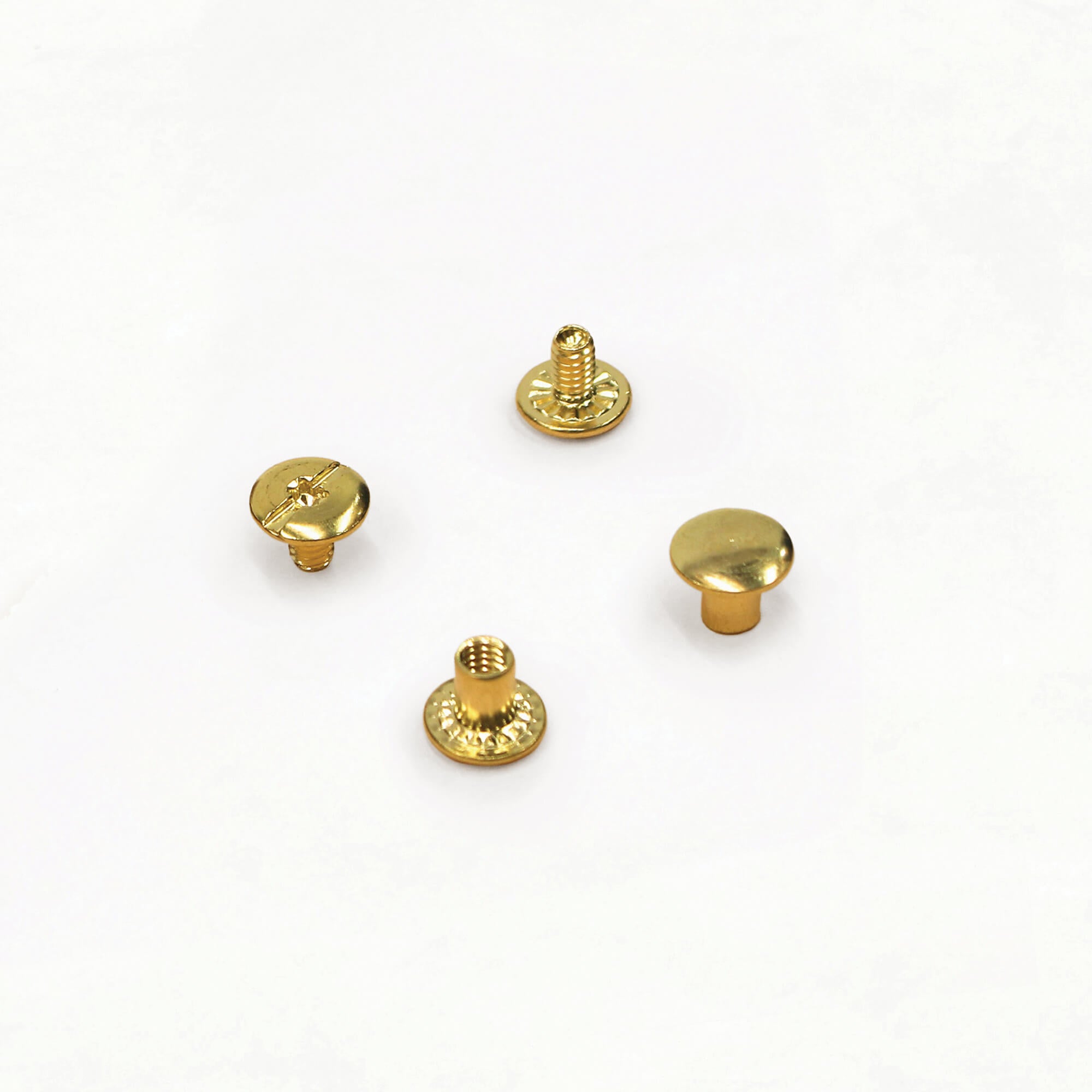
Chicago screws are high-quality metal fasteners that are great for attaching leather straps to your bag. Flat heads on both ends sit flush with the strap for a strong, reliable hold. In the case of the Fremont Tote, we use Chicago screws to attach the leather tabs at the top corners of the bag, where the cross body strap will clip on.
How Do I Use a Chicago Screw Tool?
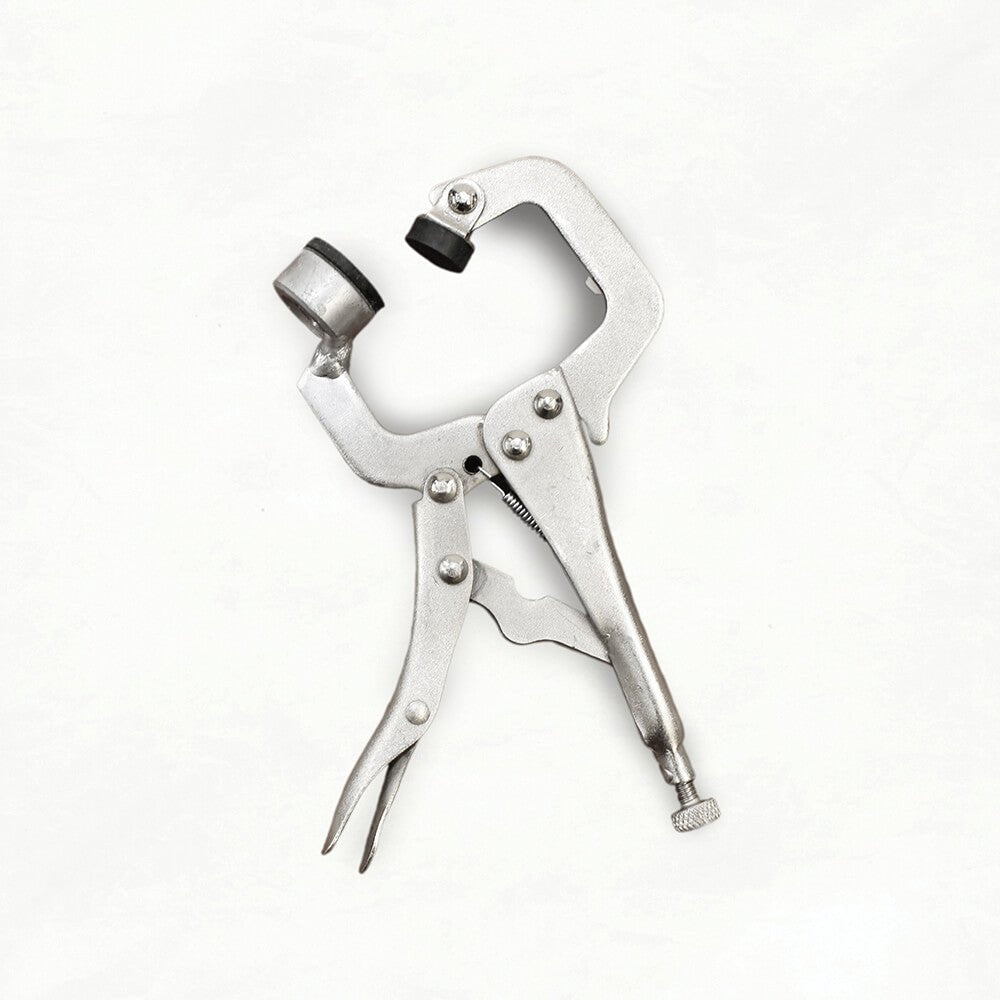
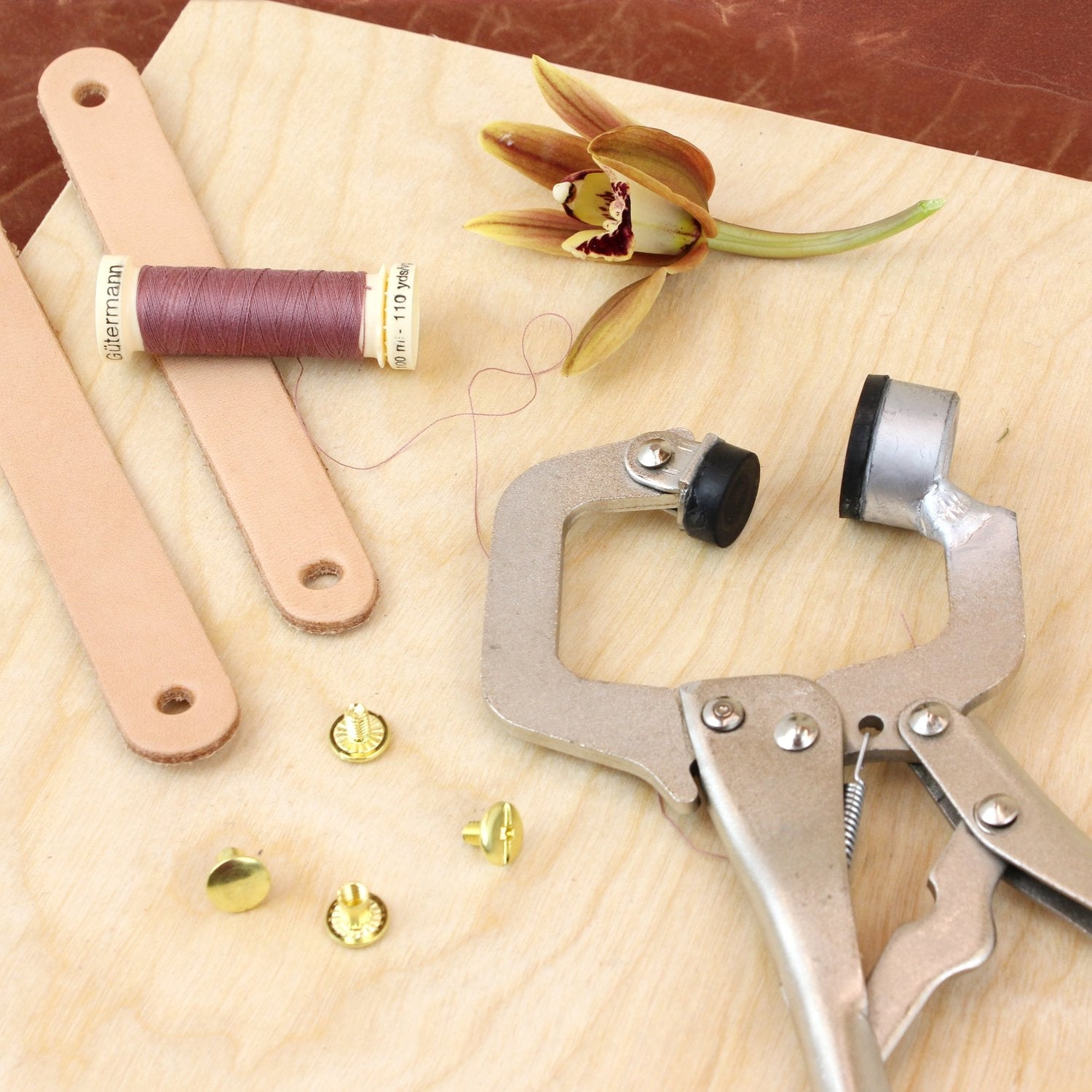
A Chicago screw tool is kind of like a set of pliers. Rubber grips on both jaws clamp around the screw and hold one side tight, so you can get at the other side with a flathead screwdriver and really tighten it down. That's what gets you an extra-strong set that will hold up to years of wear and tear.
Two things to watch for. If it's too easy to squeeze down, tighten the screw on the tool itself — lefty loosey, righty tighty. The tighter it clamps, the better it holds the Chicago screw in place while you screw it in. And sometimes this can pinch your hand, so rearrange your grip to squeeze further back on the handles rather than right up in the jaws.
One more trick: sometimes we'll put a little dot of Loctite on the screw before threading it into the receiving end, just to make sure it doesn't unscrew or come out. We like blue Loctite because it's removable, in case you ever want to take the screw out, but it gives that extra little bit of security. We'll use it even when we're using the Chicago screw tool. (Affiliate link — as an Amazon Associate we earn from qualifying purchases.)
Chicago Screws vs. Rivets: Which Should You Use?


Both do the same job: they make it possible to attach leather to your bag without an industrial sewing machine that can sew through leather. Rivets get set once and stay set, so they're the right call for weight-bearing straps that need to hold up to a lot of wear and tear. A Chicago screw threads together instead, which means you can back it out with a screwdriver and put it back — handy anywhere you might want to swap a strap or take the bag apart later.
Want to go deeper on rivets? Double-Cap vs. Tubular Rivets breaks down the two kinds, and ▶️ Bag Making Rivets 101 has the video tutorials.
SHOP TOOLS + SUPPLIES
About the Author