


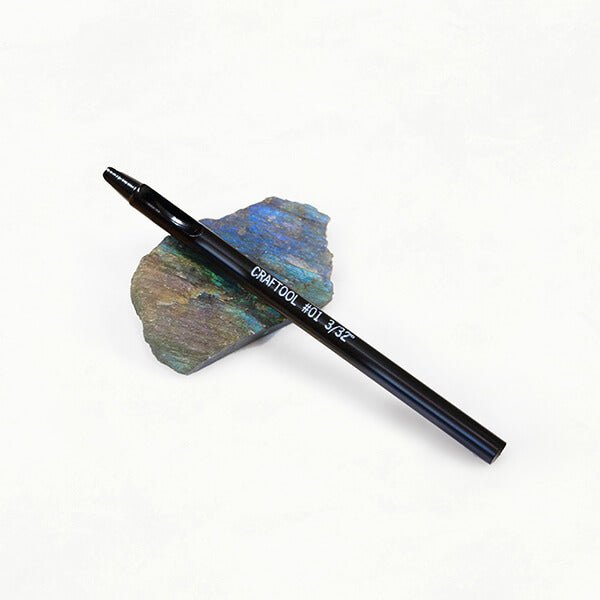
Every bag maker needs a couple of drive punches in their toolbox. You could grab a leather strip and a drive punch and make a belt! Or a dog collar! 🐶 So many possibilities.
We LOVE tools, and learning to use them is super empowering. A drive punch is an essential tool for the first step of adding hardware, punching the hole.
It cuts precisely-sized holes in leather and fabric. You strike it with a mallet on top of a punching board, and it empties itself of punched material through the side barrel, so there’s never any clogging.
Rotary Punch or Drive Punch?
There are two different ways to punch a hole. A rotary punch has a bunch of different hole sizes on a wheel, and you just rotate to the size you want. A drive punch is one size per punch, so you could buy six drive punches to equal what one rotary punch does.
A rotary punch is great, because it’s easy to squeeze and the wheel comes with several different punch sizes. But if you need to make a hole in the middle of a piece of fabric, a rotary punch isn’t going to cut it, so to say. Its reach only goes so far in from the edge, and getting to the center of a panel would mean scrunching all your fabric into the jaws.
That’s where drive punches come in! Drive punches are used with a mallet on a cutting board, so you can easily access any part of the fabric.
Which Drive Punch Size Do You Need?
These three sizes are the essential ones, and between them they cover everything you need to make all the Klum House bags.
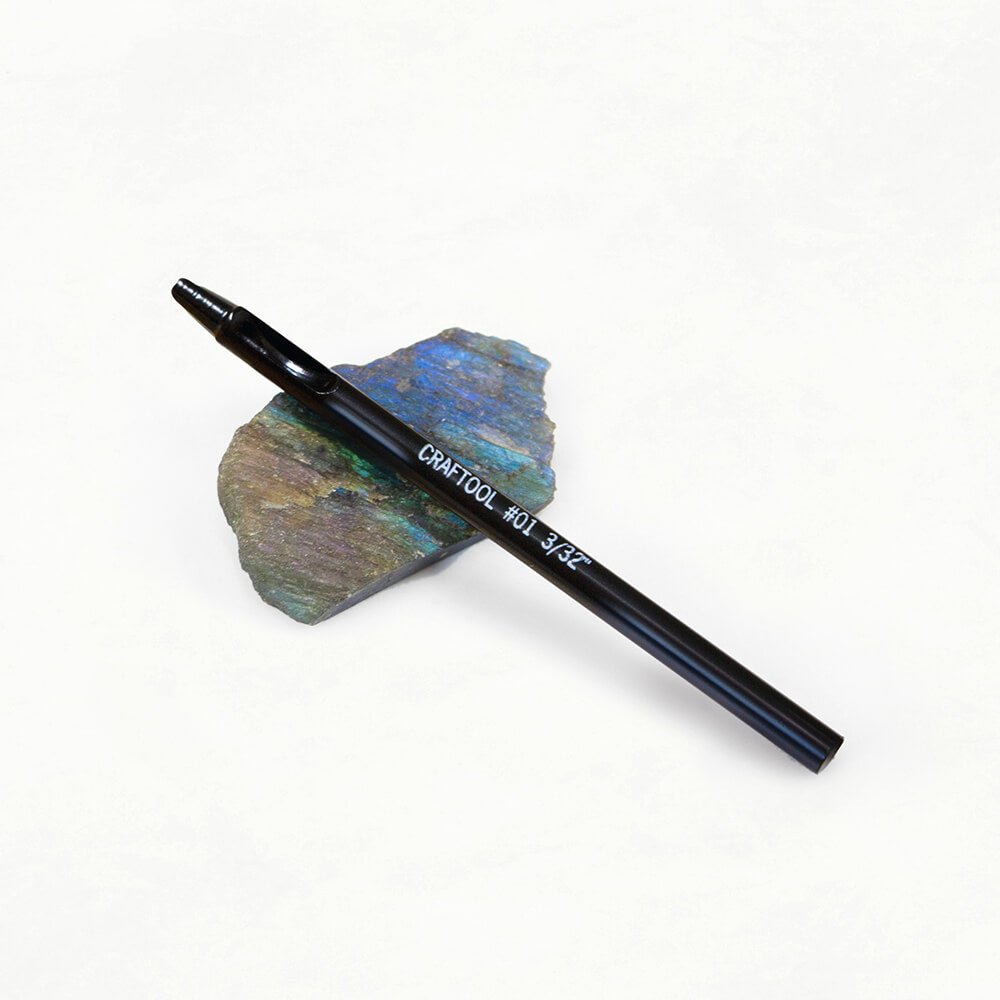
- ³⁄₃₂" (size #1, 2.3 mm) - to punch holes in fabric
- ⅛" (size #2, 3.1 mm) - to punch holes in leather
- ³⁄₁₆" (size #6, 4.7 mm) - to punch holes for Chicago Screws
The most common sizes we use on Klum House bags are ³⁄₃₂" and ⅛".
What Punching Surface Should You Use?
I get this question all the time. What you want is a Poly Punching + Cutting Board, and it is a lot thicker than most kitchen cutting boards, at about a quarter inch. Whatever you use, make sure you don’t mind getting a bunch of holes in it.
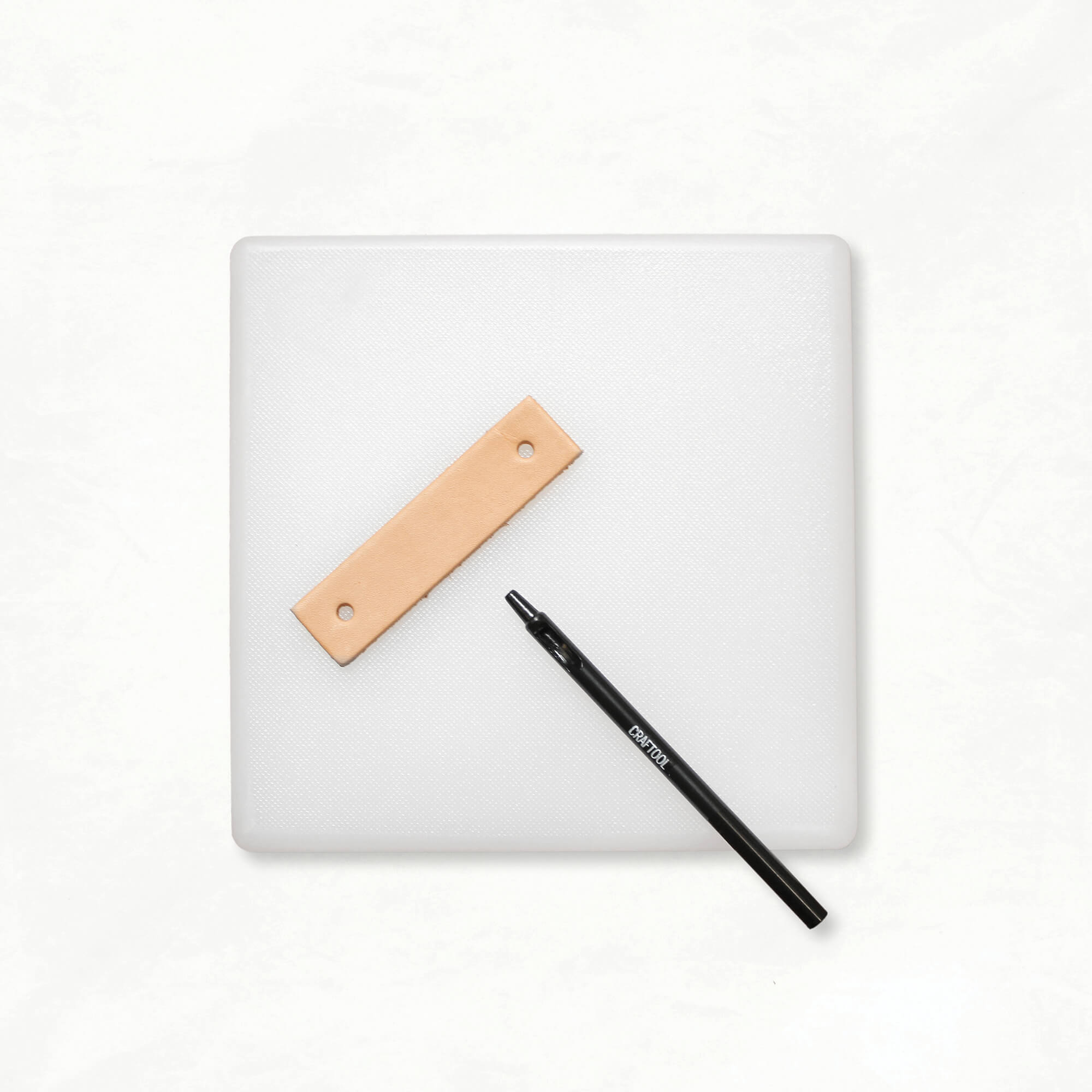
You can absolutely use wood. Just know that wood doesn’t self-heal the way a poly board does, so the surface gets chipped over time, and then you don’t have a nice flat surface. Your hole can end up not going exactly where you want it to if the surface underneath is uneven.
Hot Tip > Make sure there’s no other part of your bag or fabric underneath the spot where you’re going to punch, so you don’t accidentally punch a hole in the wrong spot.
A punching board is not a setting stone, and the two get confused a lot. A punching board is intentionally a little soft, which is what makes it right for sharp punching tools. A setting stone, like a slab of granite, is very hard, and it is meant for setting hardware like rivets and snaps. If you try to set a tubular rivet on a punching board, it won’t work. Likewise, if you try to punch a hole on a setting stone, you’ll damage your tool.
Can You Use a Hammer Instead of a Mallet?
Best practice is to strike a drive punch with a mallet. But if you don’t have one, you aren’t going to use the drive punch a ton, and all you have is a household hammer, then that’s fine. Just know that your drive punch will last longer if you use a mallet, because striking a metal tool with a metal hammer damages the tool at the hitting end over time.

It really does have to be a non-rubber mallet, though. A rubber mallet has some bounce to it and therefore isn’t able to transmit the full force of your strike the way it needs to. Rubber mallets definitely don’t cut it.
Get All the Tools You Need in One Set
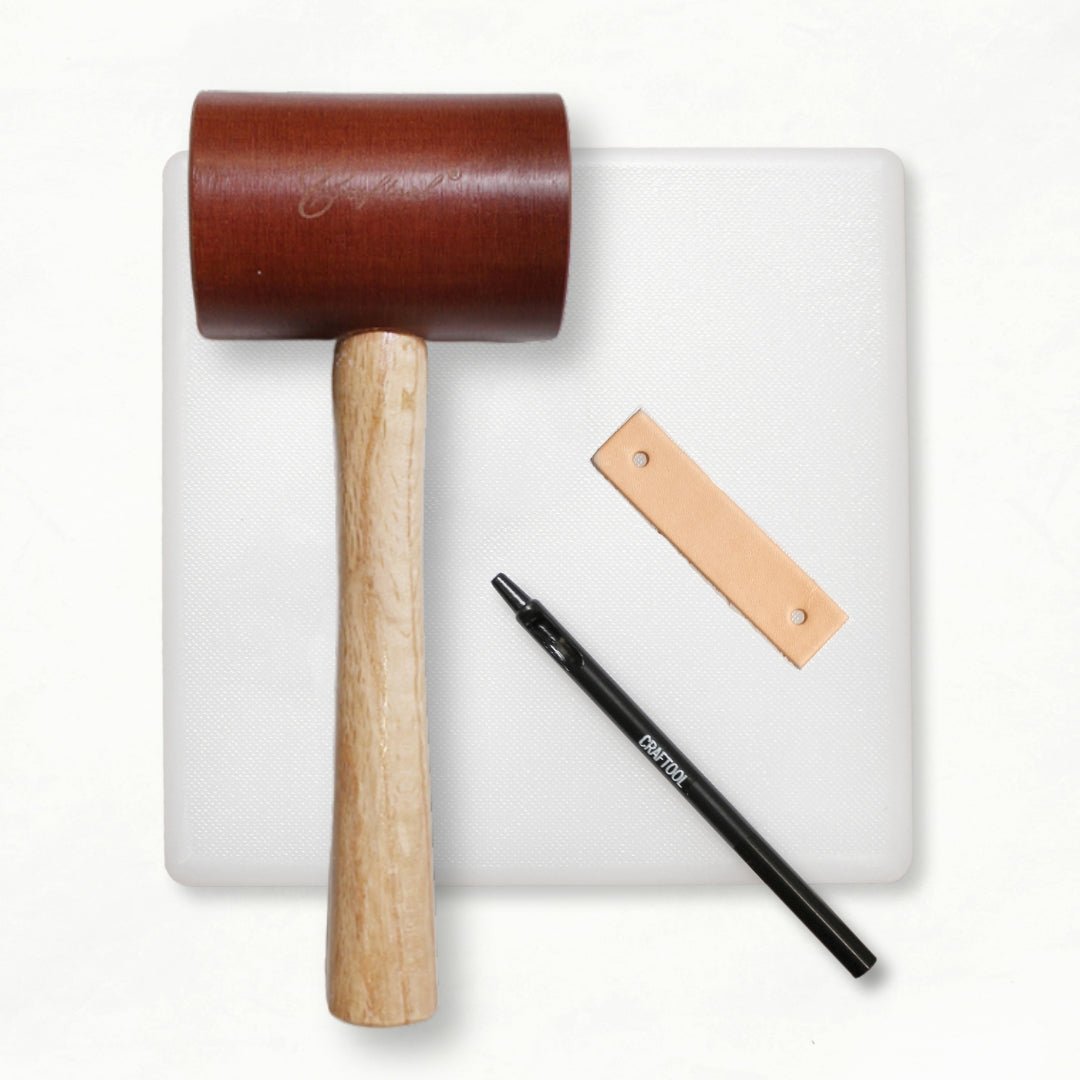
Our drive punch, poly punching + cutting board, and bakelite mallet are designed to work together, making punching holes in fabric or leather a breeze.
▶️ Let’s Talk Bag Hardware covers the hardware that goes into those holes: snaps, rivets, buckles and rings.
SHOP DRIVE PUNCHES
About the Author
